

THANK YOU FOR SUBSCRIBING

Insurance CIO Outlook Weekly Brief
Be first to read the latest tech news, Industry Leader's Insights, and CIO interviews of medium and large enterprises exclusively from Insurance CIO Outlook


 J. Keith Pellerin, President & CEO
Shore Alliance Group addresses this challenge by helping insurance organizations connect those systems and process information with greater speed, accuracy, and transparency.
Its proprietary DEX® platform was developed around a persistent gap in employee and voluntary benefits: many systems were never designed to communicate with one another. Rather than asking every participant to replace existing technology or conform to one rigid data structure, Shore Alliance builds a path between them.
“The result is a practical approach to real-time processing that considers not only the needs of a primary client but also the wider network of organizations that contribute to each transaction,” says J. Keith Pellerin, president and CEO.
Solving a Problem across the Ecosystem
Insurance transactions cross organizational boundaries. Enrollment data may move from a broker or benefits administration platform to a carrier’s policy administration system, then return with confirmation of issued coverage. Every handoff creates opportunities for incompatible formats, missing information, or delays. These challenges are acute in employee and voluntary benefits, where policy structures and enrollment arrangements vary.
Shore Alliance’s approach starts with the entire process. The company works to identify where information gets stuck, what each participant needs to receive, and how the data should move between systems. This ecosystem-wide perspective informs both platform design and implementation. By addressing the points of friction between organizations, DEX® can help a client improve its own operations while making transactions more manageable for brokers, enrollment partners, and other stakeholders.

What typically has taken many two to six weeks to manually process, DEX® accomplishes today in two to six minutes.
Connecting More Than 300 Data Sources
The insurance benefits market relies on a varied collection of technologies. Some enrollment providers use spreadsheets or established electronic data interchange (EDI) feeds, while others rely on application programming interfaces (APIs) and proprietary benefits administration platforms. In some channels, paper applications and PDF documents remain part of the process. Requiring every partner to use the same method can limit distribution and make integration costly.
DEX® is designed to accommodate these different approaches within one platform. It can ingest data through varied channels, interpret the information, and transform it into the format required by a destination system. Where paper or image-based documents are involved, the platform can convert the information into digital data for subsequent processing. This flexibility gives clients a way to work with partners at different levels of technical maturity without assembling separate solutions for every channel.
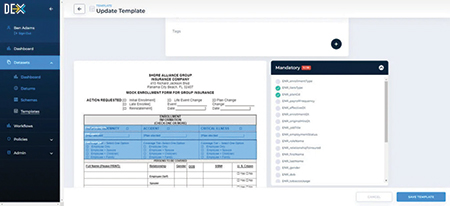 Shore Alliance reports that its platform supports data from more than 300 enrollment sources. That breadth matters because the variety is not limited to file formats. Data values, structures, delivery methods, and business rules can differ from one provider or product to another. DEX® is built to handle those variations while applying the rules relevant to a particular enrollment, case, or product.
Policy administration systems also face requirements specific to group and voluntary benefits. Master policies may contain multiple certificates; coverage may depend on issue or attained age; and enrollment may involve associations, memberships, or independent contractors. Shore Alliance works backward from the intended outcome instead of assuming one integration fits all.
Speed through Record-Level Processing
For many organizations, the cost of disconnected systems is most visible in the time required to issue coverage. Enrollment processing that involves manual adjustments can take weeks, leaving organizations to plan open-enrollment activity far ahead of the date coverage must begin. Delays can also create uncertainty for employees and extra work for operational teams.
DEX® shortens this cycle by interrogating data at both the file and individual-record levels. Instead of treating an entire file as unusable when some records fail validation, the platform can identify the records that meet the required rules and flag those that need attention. Valid records can proceed toward coverage issuance, while exceptions can be reviewed and resolved separately. This approach reduces the likelihood that a small set of errors will hold up an entire submission.
Modernization without Replacing the Core
Insurance organizations may depend on policy, billing, claims, and commission systems that have been in place for years. Replacing them can require substantial investment and introduce operational risk. Yet leaving those systems untouched does not resolve the problems created when new enrollment partners and data channels cannot connect to them.
DEX® works alongside legacy and newer systems, making data more consistent without a wholesale technology overhaul. It accepts information in a partner’s existing structure, validates and transforms it, and delivers it in the form a destination system expects. Organizations can improve information flow while preserving existing investments.
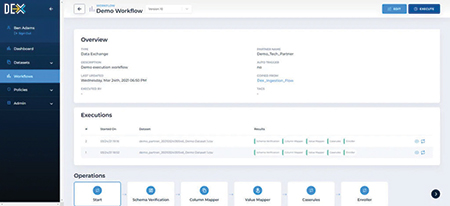 Pellerin summarizes the philosophy as follows, “We meet our clients wherever they are in their data journey.” The statement reflects a practical understanding that clients differ in their systems, integration capabilities, operating models, and appetite for change. Some prefer a software-as-a-service deployment, which can support faster implementation; Shore Alliance also considers hybrid and on-premises arrangements where circumstances call for them.
Implementations typically take 60 to 75 days. Shore Alliance handles much of the work, provides progress reports, coordinates testing, and supports training with guides and tutorial videos. After launch, the team helps users resolve questions and accommodate enhancements, limiting the burden on client staff.
Accuracy, Traceability, and Security
Fast processing has limited value if the data cannot be trusted. In insurance, a missing or duplicated coverage record can become a serious issue when a claim is submitted. Inaccurate information may also affect premiums, commissions, and downstream reports. When stakeholders cannot establish where a discrepancy entered the process, resolving it can consume time and create uncertainty about responsibility.
DEX® addresses this risk through data interrogation and versioning. The platform checks incoming information against relevant requirements and preserves versions at each transformation point. Users can review the path a data element took, examine how it was interpreted, and identify whether information was absent from the original feed or changed during processing. Visual data trees and interfaces make this history accessible, supporting investigation and business oversight.
Security is another core consideration because enrollment transactions contain sensitive personal and benefits information. Shore Alliance describes safeguards around DEX® that include a web application firewall, IP whitelisting, VPN access, and multifactor authentication. These controls complement the platform’s emphasis on traceability, with security treated as a requirement across the ecosystem rather than a feature added after integration. Specific security needs and operating arrangements remain important considerations when configuring a client environment.
Turning Operational Data into Business Insight
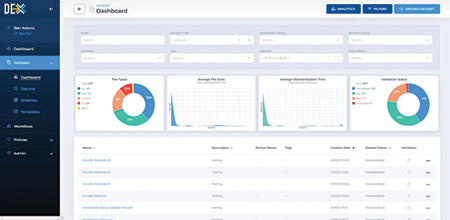
The information passing through enrollment operations can reveal more than whether a transaction succeeded. When data from different sources is brought together, it can help organizations understand patterns in performance, identify recurring sources of error, and decide where to focus improvement efforts. Shore Alliance supports that work through configurable dashboards, key performance indicators, reporting, and analytics.
Different users need different views. Brokers, underwriters, actuaries, enrollment partners, and operational leaders may ask different questions of the same information. DEX® allows dashboards and reports to be configured around those roles and priorities. Users can examine performance across combinations of brokers, enrollment platforms, and products, compare conversion rates over historical periods, and rank data sources or attributes by the errors they generate.
The platform’s role, therefore, extends beyond moving enrollment information. It helps turn fragmented operational data into a more coherent view of the business. For organizations managing multiple channels and partners, that can make it easier to distinguish isolated incidents from persistent patterns and direct resources toward the issues with the greatest impact.
These comparisons help leaders distinguish one-off problems from recurring weaknesses, assess whether corrective actions work, and make decisions grounded in performance rather than assumptions or isolated anecdotes.
A Partner for Complex Challenges
Shore Alliance takes a collaborative, tailored approach. Its teams work with clients to understand unusual workflows, legacy constraints, and requirements that do not fit a standard implementation. They map the problem, test approaches, and determine how DEX® can support the desired outcome rather than forcing every client into the same template.
One client example illustrates the commercial significance of that flexibility. The organization had struggled to win business because its internal systems required enrollment partners and benefits administration platforms to submit information in a prescribed structure. With DEX®, the client could accept data in the formats its partners already produced, removing a constraint that had weakened its market proposition.
Pellerin says the client’s business “has nearly doubled in size since the introduction of that flexibility.” The example shows how integration can influence not only back-office efficiency but also a company’s ability to compete and serve distribution partners.
Looking ahead, Shore Alliance is considering the growing role of artificial intelligence in data management and business processes. The company sees potential efficiency gains, including through agentic applications, while recognizing that clients differ in their comfort with embedded AI. Its direction is to tailor the level of AI adoption to individual client needs rather than impose one model across the board. That approach is consistent with its broader emphasis on meeting organizations where they are and designing around real operational requirements.
 For Shore Alliance Group, the measure of successful technology is whether it removes friction from the business relationships that depend on accurate, timely information. DEX® connects systems that cannot readily communicate, accelerates the journey from enrollment submission to issued coverage, and gives stakeholders a clearer view of the data behind each transaction. Its combination of flexible integration, record-level validation, traceability, and analytics positions the company as a partner for insurers and benefits organizations seeking better processing without abandoning the systems they already rely on.
In recognition of its work in this field, Shore Alliance Group has been named Insurance Real Time Processing Platform of the Year for 2026. The distinction underscores the relevance of its focus: helping insurance organizations move information across a fragmented ecosystem with greater speed, accountability, and flexibility. As enrollment channels and technology environments continue to diversify, the ability to connect them while preserving control over data will remain central to the company’s value proposition.
Company
Shore Alliance Group
Management
J. Keith Pellerin, President & CEO
Description
Shore Alliance Group helps insurers, brokers, and benefits administrators overcome data fragmentation through its proprietary DEX® platform. By automating enrollment processing, validating records, and connecting disparate systems, the company enables faster coverage issuance, stronger data integrity, and actionable business insights.

